
Open-plan kitchen living has become one of the most sought-after features in UK homes. The appeal is obvious, a single connected space where cooking, dining, and relaxing happen together, with light flowing freely and the feeling of space that a series of separate rooms simply can’t replicate.
But an open-plan space that looks effortlessly beautiful in a magazine shoot is harder to achieve than it appears. Without careful design, the same features that make open-plan living so appealing, the openness, the connection, the flow, can create a space that feels noisy, cluttered, and impossible to zone effectively.
This guide covers the key design decisions that determine whether an open-plan kitchen works brilliantly or becomes a source of daily compromise.
Start With the Kitchen as the Anchor
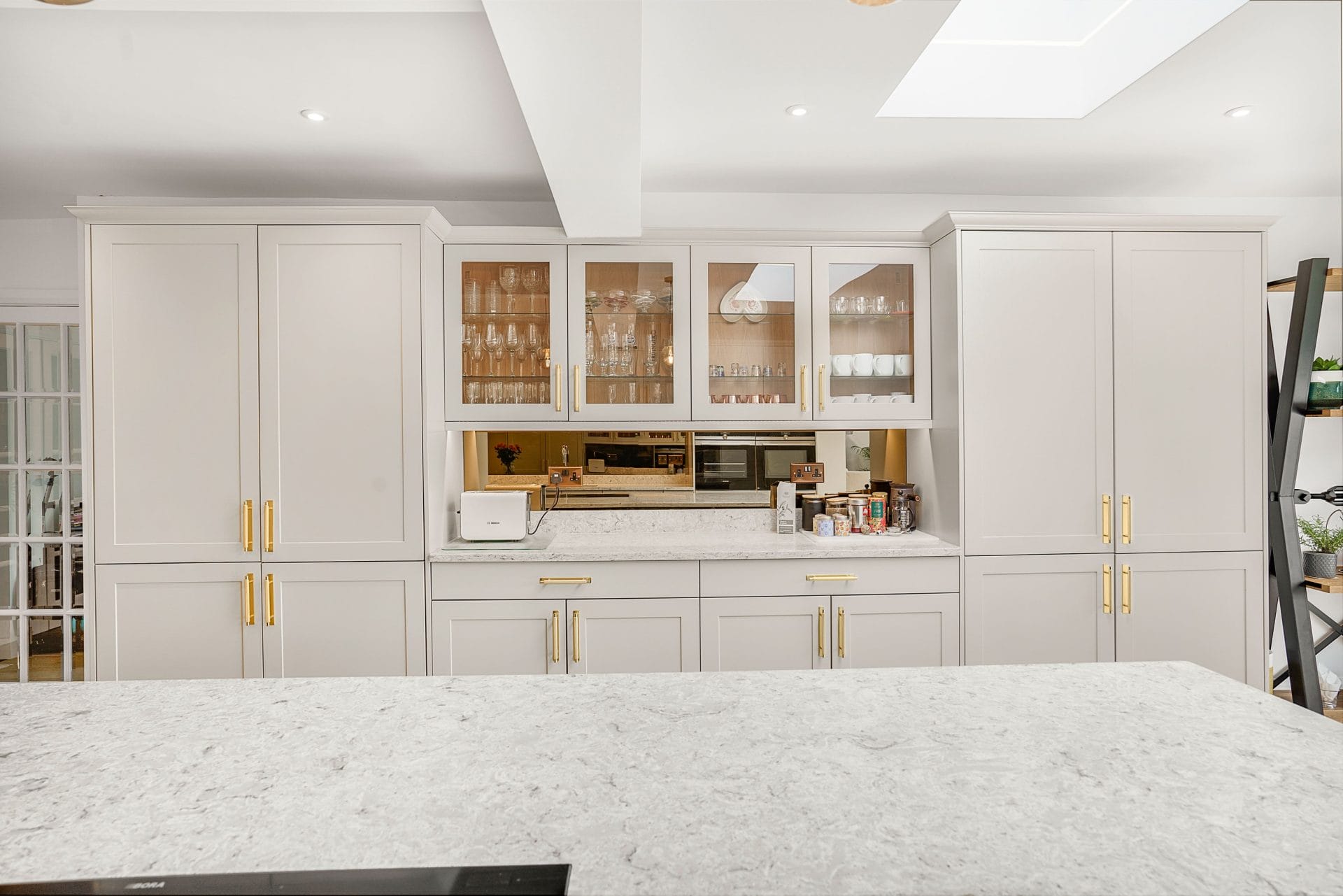
In most open-plan spaces, the kitchen is the visual and functional anchor of the room. It’s the element that draws the eye first and sets the tone for everything around it. This means the kitchen design can’t be treated in isolation, it needs to feel coherent with the dining and living areas it flows into.
Practically speaking, this influences everything from cabinetry height and colour to the direction the island faces and the way the worktop material transitions into the rest of the space. A kitchen that has been designed purely as a kitchen, without regard for how it reads within the larger room, will always feel slightly disconnected, even if the individual elements are beautiful.
Our kitchen design range, including handleless, modern, in-frame, and traditional styles, gives a sense of the directions we can take a kitchen. The right choice depends on the character of your home and the wider space it sits within.
Zoning: The Key to Making Open-Plan Work
The biggest practical challenge in an open-plan space is creating distinct zones, cooking, dining, relaxing – without breaking the sense of flow that makes the layout desirable in the first place. The tools available to achieve this are largely visual and material rather than structural.
Level changes: A slight raise or drop in floor level between zones creates a clear spatial distinction without a wall. This is a relatively significant intervention, but in the right space it can be transformative.
Flooring transitions: Changing flooring material between the kitchen and the living area from stone or tile in the kitchen to timber or carpet in the seating zone, is one of the most effective and cost-efficient ways to define separate areas. The transition point itself becomes a natural boundary.
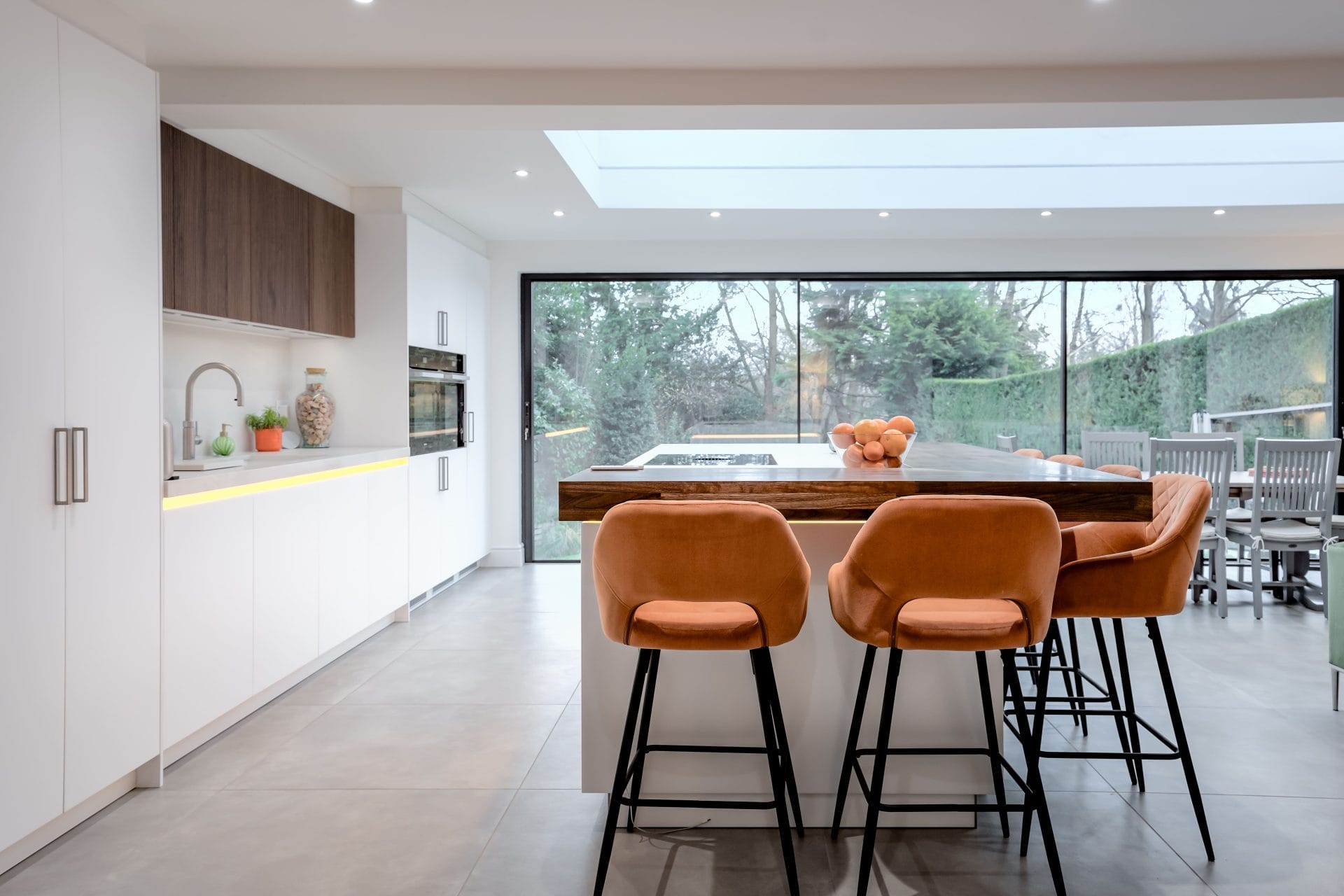
The island: A kitchen island, positioned thoughtfully, acts as a natural divider between the kitchen and dining zones while remaining visually open. It also adds prep and storage space, and the seating it provides creates a social focal point that works beautifully in open-plan spaces. We’ve written more about kitchen islands in our blog if you’d like to explore further.
Lighting zones: Separate lighting circuits for the kitchen, dining, and living areas allow you to shift the mood of the space without changing anything physically. Pendant lighting over the dining table pulls it visually away from the kitchen. Downlights in the cooking area provide practical task lighting. Adjustable ambient lighting in the seating zone creates warmth in the evenings.
 Handling Noise and Smell
Two practical concerns that come up in almost every open-plan conversation: noise from cooking and the spread of cooking smells into the living space.
On noise, hard surfaces – stone floors, tiled walls, hard worktops – reflect sound, which can make an open-plan space feel surprisingly loud during food preparation. Introducing soft furnishings, rugs, and acoustic panels in the living zone absorbs sound effectively and makes the space feel more comfortable.
On cooking smells, a high-performance extractor is non-negotiable in an open-plan kitchen. Recirculating extractors are less effective than ducted systems – if it’s possible to duct externally, it’s always the better choice. Induction hobs also generate significantly less cooking fume than gas, which is worth considering if the smell question is a priority for you. Brands like BORA offer downdraft induction systems that extract directly through the hob, which are particularly effective in open-plan settings.
Storage: More Is More in an Open-Plan Kitchen
In a closed kitchen, what’s behind the doors is largely invisible from the rest of the house. In an open-plan space, the kitchen is always on view, which means clutter has nowhere to hide. Generous, well-planned storage is even more important here than in a traditional layout.
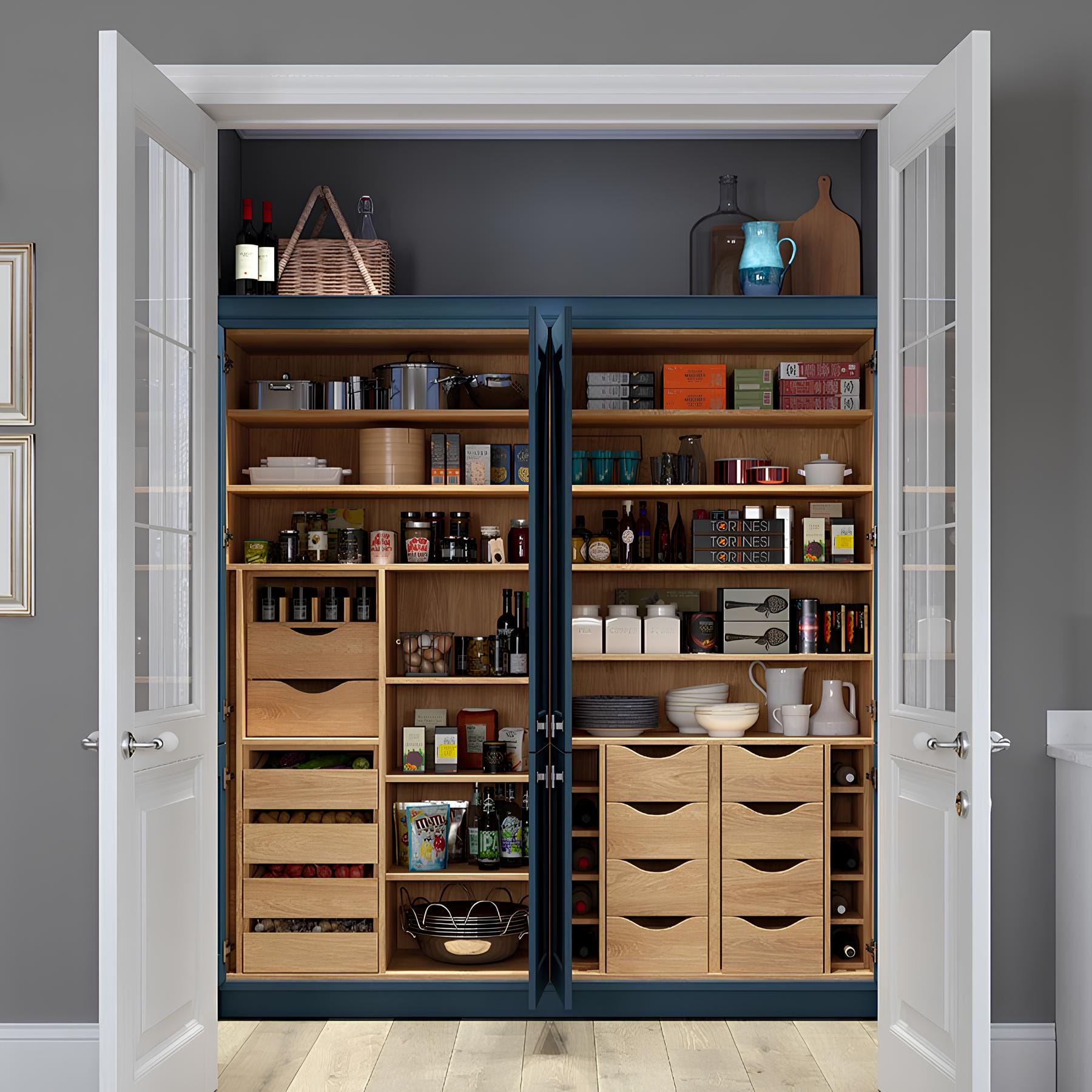
Tall larder units, deep drawer banks, and integrated appliance housing all contribute to a kitchen that looks considered and calm when you’re not actively cooking. Open shelving and display areas can work beautifully in an open-plan context, but they require discipline to maintain, only include them if you’re confident you’ll enjoy curating what sits on them.
We work with Masterclass Kitchens, and their storage offer is one of the reasons we recommend them so readily. Their internal organisers, larder units, and drawer systems are designed to make the most of every centimetre, which in an open-plan kitchen makes a real difference to how the space feels day to day.
Lighting the Whole Space Coherently
Lighting an open-plan space requires more thought than lighting a single room, because the same scheme needs to work for cooking, eating, relaxing, and socialising, sometimes all at once, sometimes independently.
A few principles that work well:
Avoid relying solely on ceiling downlights, they provide good general illumination but flatten a space visually and don’t create the warmth that makes a living area feel inviting. Layer in pendant lighting, floor lamps, and wall lighting in the living zone.
Ensure the kitchen has dedicated task lighting, under-cabinet lights over worktops make food preparation easier and safer, and they add a warm glow that looks beautiful in the evening when the overhead lights are dimmed.
Use dimmer switches throughout. The ability to shift the mood of an open-plan space by adjusting lighting levels is one of the most valuable things you can do, and it costs very little relative to the difference it makes.
Talk to Us About Your Open-Plan Project
At HKS Interiors, we design and install open-plan kitchen spaces across East Sussex regularly. We understand the particular challenges these spaces present, and we enjoy working through the details that make the difference between a space that looks good and one that genuinely works.
If you’re planning an open-plan renovation, whether you’re extending, knocking through, or working with an existing open layout, we’d love to hear about it. Book a free design appointment at one of our showrooms, or download our brochure for inspiration.
Frequently Asked Questions: Open-Plan Kitchen Design
Do I need planning permission to create an open-plan kitchen?
It depends on whether structural changes are involved. Removing a load-bearing wall requires a structural engineer’s sign-off and building regulations approval, but not typically planning permission for works within the existing footprint of a house. Non-load-bearing walls can generally be removed without formal consent. We always recommend confirming with your local authority or a structural engineer before any wall removal work begins.
What’s the best flooring for an open-plan kitchen and living space?
Continuity generally works well, using the same flooring material throughout, or a very complementary combination, helps the space feel cohesive and spacious. Large-format stone effect tiles or engineered oak are popular choices because they’re durable in the kitchen zone while looking beautiful in the living area. A rug in the seating zone adds warmth and helps define that space without interrupting the visual flow.
How do I stop cooking smells spreading into the living area?
A high-performance ducted extractor is the single most effective solution. Induction hobs produce significantly less fume and odour than gas, which also helps. BORA downdraft hob extractors, which we supply and install, are particularly effective in open-plan settings as they extract at the source before smells can travel.
Is a kitchen island essential in an open-plan space?
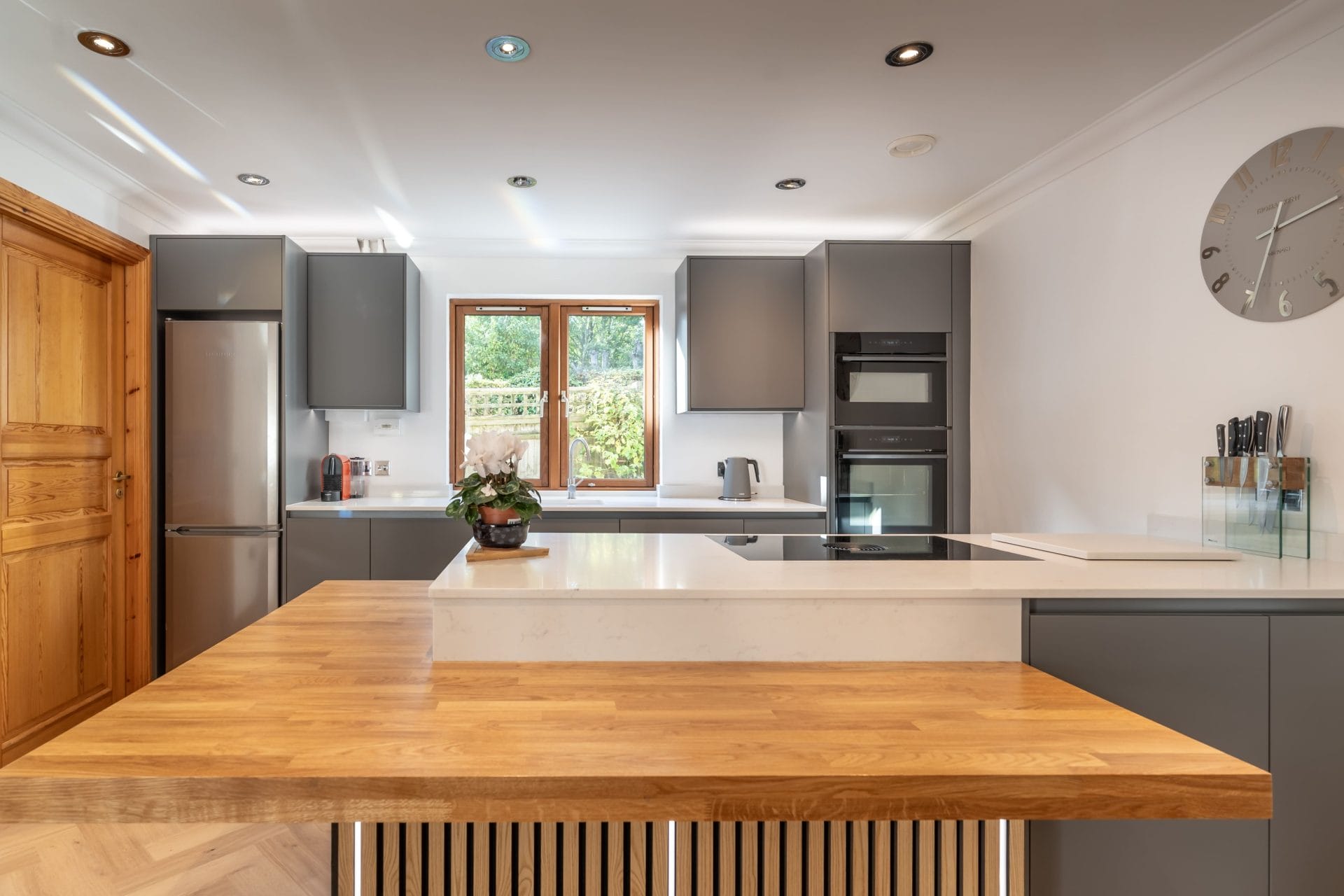
Not essential, but it is one of the most effective design tools available. An island creates a natural visual break between cooking and living zones, adds significant prep and storage space, and provides casual seating that works brilliantly in a social, open-plan context. Whether it’s right for your space depends on the dimensions and flow of the room, our designers can advise during your free appointment.
Can you design both the kitchen and the wider living area?
At HKS we design and install kitchens and a wide range of other rooms, including living rooms, utility rooms, and boot rooms. For open-plan projects, we’re experienced in thinking about the space holistically, not just the kitchen in isolation. Explore our other rooms to see the full range of what we can do.
HKS Interiors designs and installs bespoke kitchens, bathrooms, and bedrooms across East Sussex from showrooms in Heathfield, Haywards Heath, and Eastbourne.