
If you have visited one of our showrooms recently, there is a good chance you have already seen a Quooker tap in action, boiling water instantly straight from the tap. It is one of those features that sounds like a small luxury until you have lived with one, at which point it becomes very difficult to imagine a kitchen without it. Here is what a Quooker tap actually does, why so many of our clients choose one, and how to decide which model suits your kitchen.
What Is a Quooker Tap?
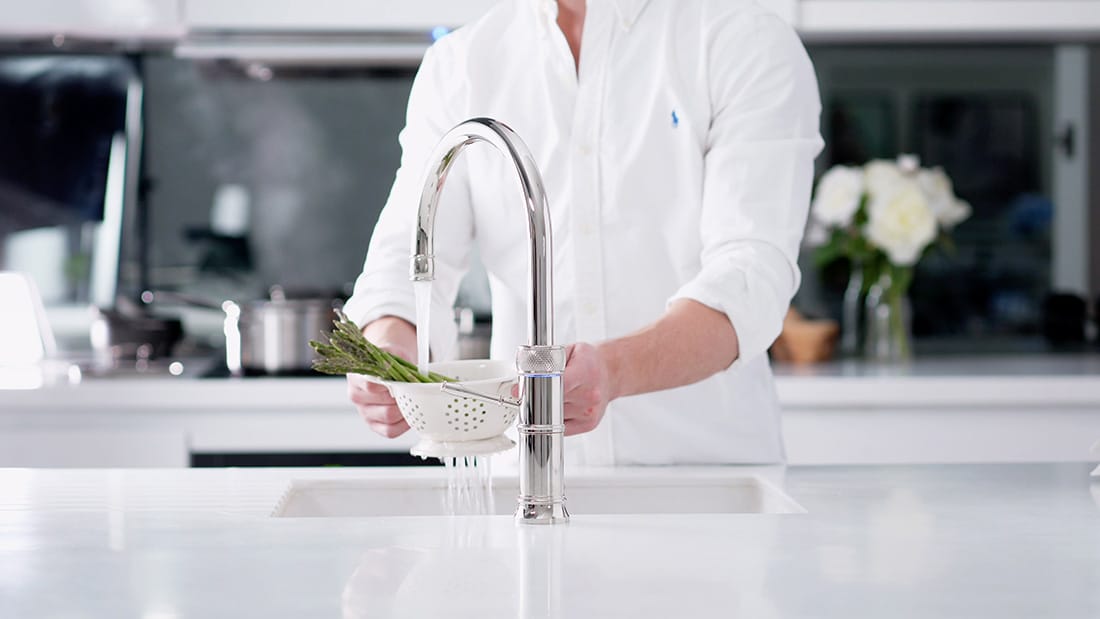
A Quooker tap delivers boiling water on demand, straight from your kitchen tap, alongside regular hot and cold water. Depending on the model, it can also provide filtered, chilled and sparkling water from the same tap. Rather than waiting for a kettle to boil, you simply turn the tap and draw off exactly the amount of near-boiling water you need, whether that is for a single cup of tea or a pan for pasta.
The system works by keeping a small, insulated tank of water at boiling point under your sink at all times, using very little energy to maintain that temperature between uses. It is a genuinely clever piece of engineering, and one that has been refined over many years to be as safe and efficient as possible.
The Everyday Benefits of a Quooker Tap
The most obvious benefit is speed. No more standing by the kettle waiting for it to click off, and no more overfilling it and boiling far more water than you actually need. For a busy household, that saved time adds up quickly, particularly during the morning rush or when you are cooking for a crowd.
There is also a genuine space saving. A Quooker tap can replace a kettle, and in some cases a separate boiling water tap, a filter jug and even a soda stream, depending on which model you choose. On a worktop where every centimetre counts, particularly in a smaller kitchen, freeing up that space makes a real practical difference.
Safety is another consideration our clients often raise, especially in households with young children. A Quooker tap is designed with a child-safety mechanism that requires you to push and turn the handle simultaneously to release boiling water, which makes it considerably harder for a child to activate by accident compared with a kettle left within reach on a worktop.
Finally, there is the energy efficiency angle. Because the tank only needs to maintain temperature rather than heat a full kettle from scratch every time, a Quooker tap typically uses less energy than repeatedly boiling a kettle throughout the day, particularly if you tend to boil more water than you need “just in case.”
Choosing the Right Quooker Style for Your Kitchen
Quooker offers several tap styles, and the right one for you often comes down to how your kitchen is laid out and how you use your sink day to day.
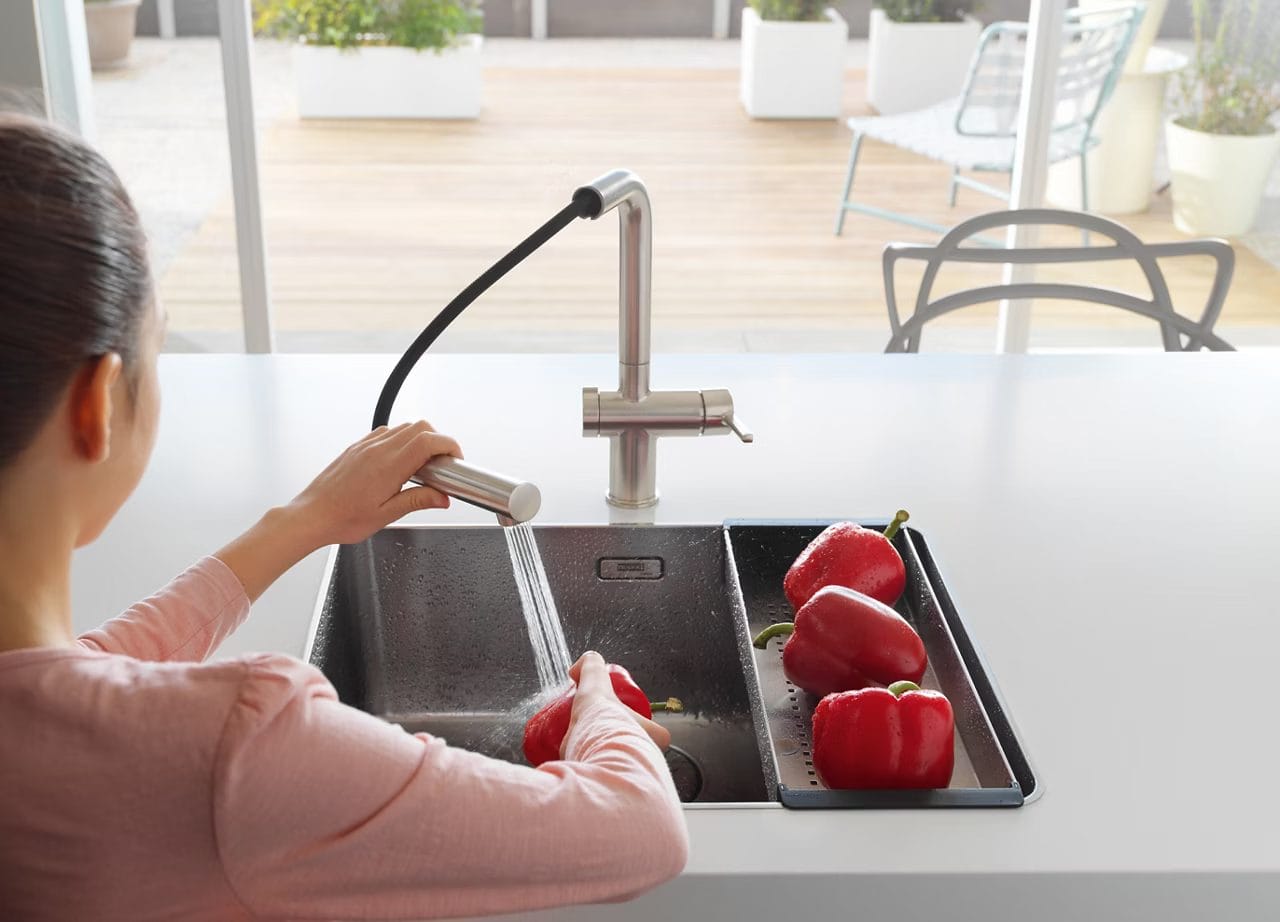
The Fusion range combines boiling water and regular hot and cold water into a single tap body, which is a popular choice where worktop space or sink layout means a second tap is not practical. The Flex range uses a flexible pull-out hose alongside the boiling water function, which is particularly useful in larger kitchens or if you regularly fill large pots away from the main sink area. For a more traditional look, the Classic range delivers the same technology in a design that suits period-style kitchens just as well as contemporary ones.
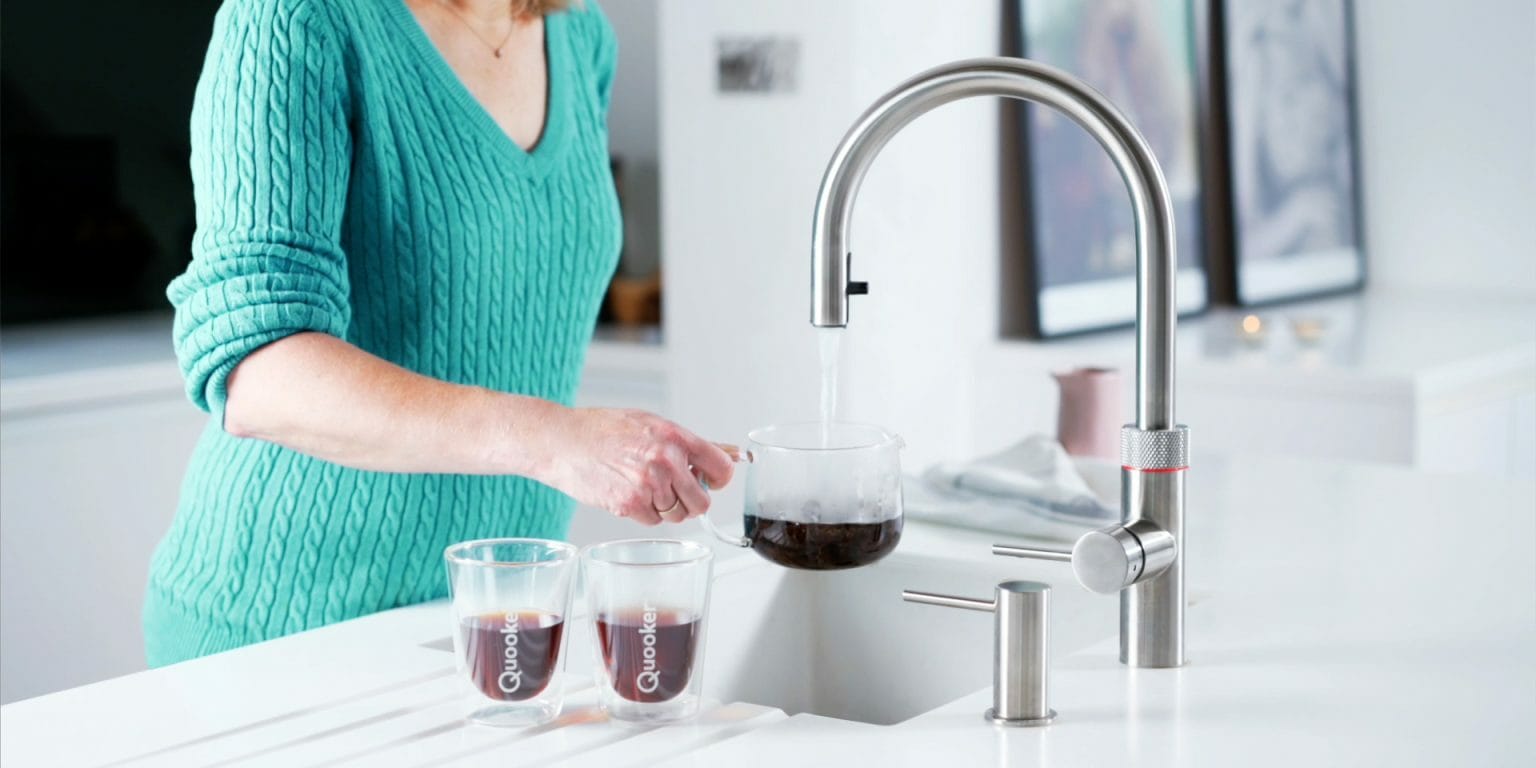
If you would like chilled and sparkling water as well, the Quooker Cube sits discreetly under your sink alongside the boiling water tank, adding that functionality without taking up any additional worktop space.
Where a Quooker Tap Fits Best
We are often asked whether a Quooker tap is worth it in a smaller kitchen, and in our experience it is often smaller kitchens that benefit the most. When worktop space is at a premium, removing the kettle, and potentially a filter jug too, frees up a surprising amount of usable space. In larger kitchens with an island, we often see clients specify a Quooker tap at the island sink specifically so drinks and cooking water can be prepared without crossing the room to the main sink.
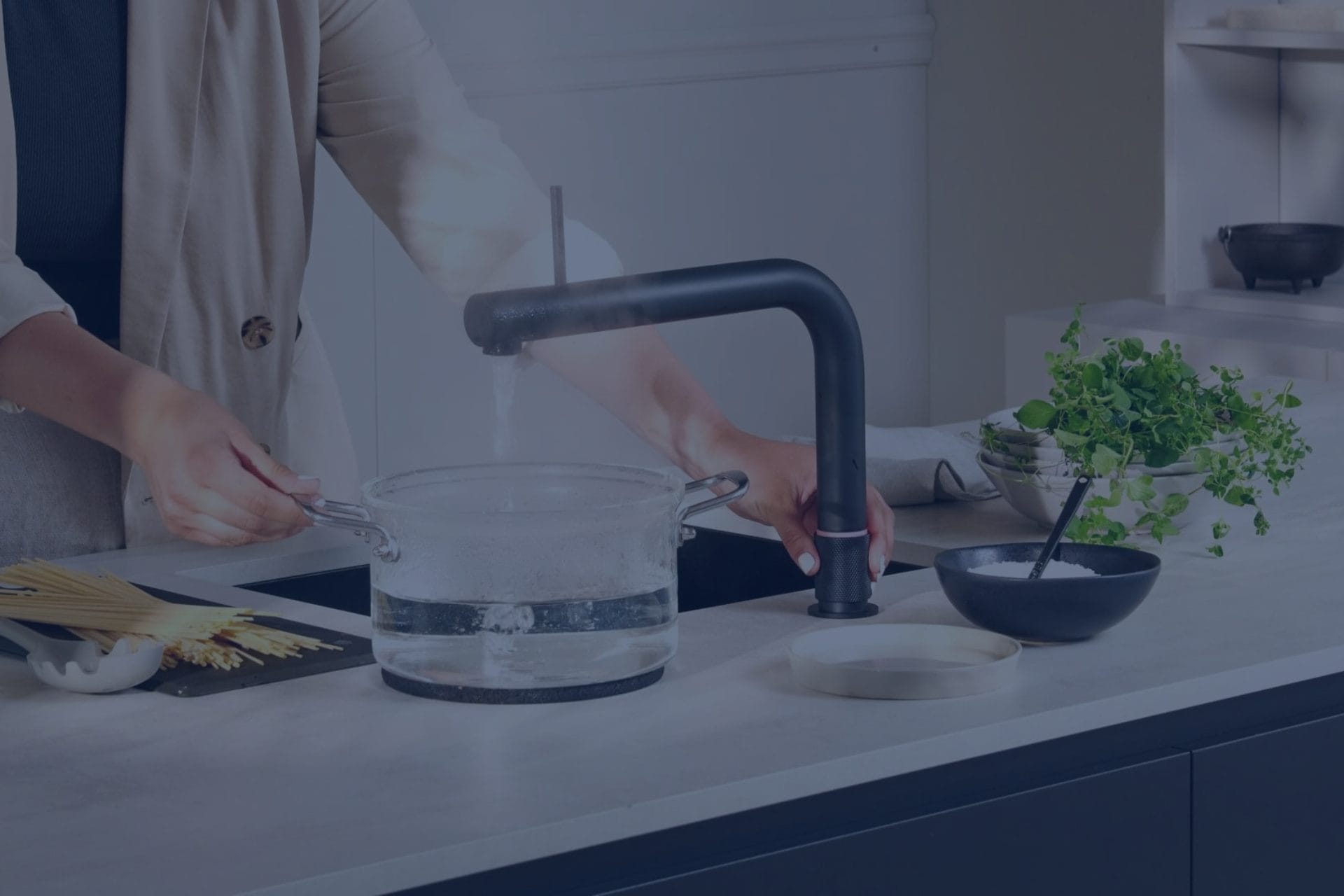
It is also worth thinking about placement alongside your hob. If your hob is close to your sink, a Quooker tap makes filling pans for pasta, vegetables or stock genuinely effortless, since you are drawing already-boiling water rather than waiting for a full pan to come up to temperature on the hob. We often pair a Quooker tap with our BORA hob range for exactly this reason, giving clients a highly efficient cooking setup from tap to hob.
Fitting a Quooker Tap During a Kitchen Renovation
If you are already planning a new kitchen, fitting a Quooker tap is straightforward, since the tank and any additional units can be positioned within your existing cabinetry from the outset. It is one of the easier upgrades to plan for early, and it is far simpler to build in during a renovation than to retrofit afterwards, since your designer can allow for the tank and pipework within the cabinet run before anything is installed. It is worth mentioning to your designer at the very start of the planning process, even if you are not sure yet which model you want, so that space and plumbing can be allowed for.
Frequently Asked Questions
Is a Quooker tap safe to have around children?
Yes. Quooker taps are designed with a child-safety mechanism that requires a simultaneous push and turn action to release boiling water, making accidental activation much less likely than with a kettle left on a worktop.
Does a Quooker tap use a lot of energy?
No. The insulated tank only needs to maintain its temperature between uses, which typically uses less energy than repeatedly boiling a full kettle throughout the day.
Can I get chilled and sparkling water as well as boiling water?
Yes, with the addition of the Quooker Cube, which sits under your sink alongside the boiling water tank and adds chilled and sparkling water to the same tap.
Will a Quooker tap suit a small kitchen?
Very well. Removing the kettle and any separate filter jug from the worktop often makes a noticeable difference to usable space in smaller kitchens.
Can a Quooker tap be added to an existing kitchen, or only a new one?
It can be added to an existing kitchen, though it is far simpler to plan the tank position and pipework during a full renovation. If you are considering one for an existing kitchen, it is worth speaking to our team to check cabinet space beneath the sink.
If you would like to see the full Quooker range in action, download our free planning guide or visit one of our showrooms, where our team can demonstrate the different tap styles and talk through which one suits your kitchen best.