
Your worktop is one of the hardest-working surfaces in your home. It’s where you prep food, rest a cup of tea, and lay out everything from shopping bags to laptops. It also plays a significant visual role in how your kitchen looks and feels, arguably more than any other single element.
And yet, for many homeowners, choosing a worktop is treated almost as an afterthought. The cabinetry gets the attention, the appliances get the research, and the worktop gets picked in a rush at the end.
This guide is designed to change that. We’ll walk you through the most popular worktop materials available today, what each one is genuinely like to live with, and how to make the right choice for your kitchen, your lifestyle, and your budget.
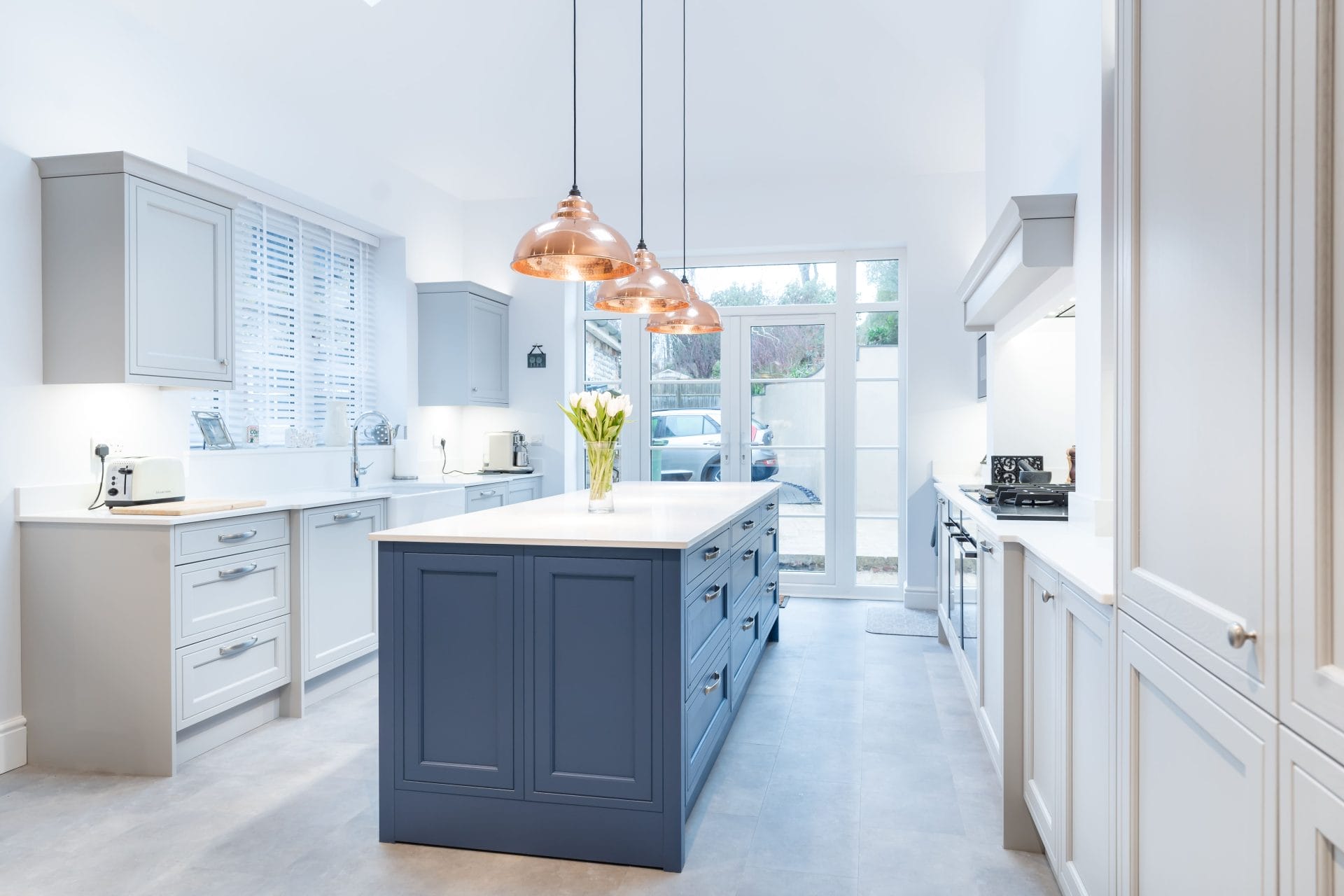
Why Your Worktop Choice Matters More Than You Might Think
Before we get into the options, it’s worth understanding what’s at stake.
A kitchen worktop is a long-term investment. Unlike paint colour or even cabinet door styles, worktops are rarely changed between full kitchen refits. Whatever you choose, you’ll be living with it for a decade or more.
The right material will feel right from day one and continue to serve you well. The wrong one will either disappoint you practically — staining, scratching, or requiring more upkeep than you bargained for, or simply stop exciting you visually after a few months.
The best worktop for you depends on three things: how you cook, how you want the kitchen to look, and how much maintenance you’re genuinely willing to do. Let’s look at each option through that lens.
Quartz Worktops
Quartz is, comfortably, the most popular worktop choice in UK kitchens right now, and for good reason.
It’s an engineered stone, made from natural quartz particles bound with resin, which means the colour and pattern are consistent throughout and can be manufactured to precise specifications. That consistency is one of its biggest practical advantages: there are no surprises between the sample you approved and the slab that arrives on-site.
What it’s like to live with: Quartz is non-porous, which means it doesn’t need sealing and is highly resistant to staining. It handles everyday kitchen life very well, liquids, oils, and food residue wipe away cleanly. It’s not indestructible (sharp impacts can chip it, and sustained direct heat from pans is best avoided), but for most households it’s as close to low-maintenance as worktops get.
How it looks: The range is enormous, from clean white and soft grey through to rich veined designs that replicate the look of marble without the vulnerability. If you want a striking visual statement, it can deliver that. If you want something calm and understated, there’s plenty of that too.
Best for: Busy households, hard-wearing, anyone who cooks regularly, and those who want a premium look without high maintenance.
Granite Worktops
Granite is a natural stone, no two slabs are identical, and that individuality is part of its appeal. If you want something that feels genuinely unique to your kitchen, granite delivers it.
What it’s like to live with: Natural granite is dense and hard, which makes it highly scratch-resistant and reasonably heat-tolerant.
The veining and movement in natural granite can be dramatic or subtle, depending on the variety you choose, and it tends to look particularly well in traditional and in-frame kitchens, where the organic quality of the stone complements the craftsmanship of the cabinetry.
How it looks: Bold, natural, and full of depth. No photograph does it justice; granite is a material that rewards seeing in person, ideally in your kitchen’s light conditions.
Best for: Homeowners who want something genuinely natural and one-of-a-kind.
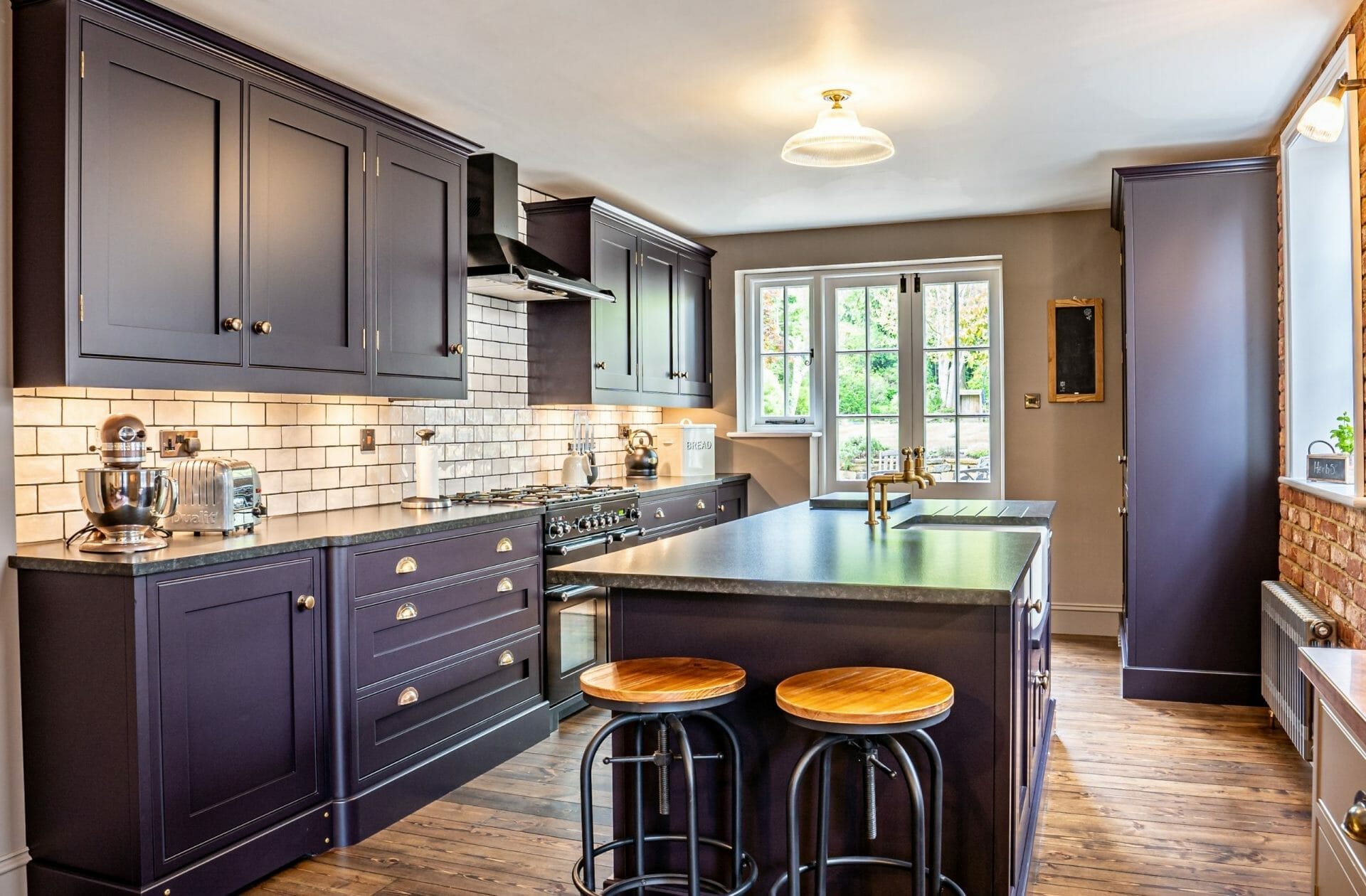
Dekton and Porcelain Worktops
Dekton and similar porcelain products have grown significantly in popularity over the last few years, and they represent some of the most technically impressive worktop materials available.
Porcelain is made through a high-pressure process that replicates, over a matter of hours, the geological forces that create natural stone over millions of years. The result is a material with exceptional density, hardness, and resistance to virtually everything the kitchen can throw at it.
What it’s like to live with: Dekton is scratch-resistant, heat-resistant, UV-stable (useful for kitchen extensions with significant glazing), and non-porous. It doesn’t need sealing and is extremely difficult to stain. Of all the worktop options available, it’s arguably the most demanding to cut and fabricate, which means the quality of installation matters, but once it’s in, it’s remarkably self-sufficient.
How it looks: The design range includes excellent reproductions of marble, concrete, and natural stone, as well as more graphic, contemporary options. The ultra-thin formats available with some porcelain products also allow for interesting design details, such as mitred waterfall edges.
Best for: Busy families with children and teenagers, as it’s an exceptionally hardwearing worktop with outstanding stain, scratch, and heat resistance, making it perfect for high-use kitchens.
Solid Timber Worktops
Timber worktops divide opinion, and that’s understandable. Wood requires more care than stone. It can stain, it can scratch, and it will expand and contract seasonally. But for many homeowners, particularly those fitting a traditional, shaker, or farmhouse-style kitchen, nothing else comes close.
What it’s like to live with: Properly oiled and maintained, a solid timber worktop is a pleasure to use and ages beautifully. Small scratches and marks can be sanded back and re-oiled. Timber is warm underfoot and to the touch in a way that stone never quite matches. The key word is maintenance: oil it regularly, dry it thoroughly, and don’t leave standing water around the sink area. In return, it will look better at ten years than it did at one.
How it looks: Warm, natural, and genuinely timeless. Oak, walnut, and iroko are all popular choices, each with a distinct character. Timber is particularly effective used in combination with a harder surface, timber run adjacent to a quartz section around the hob, for example, is a combination that works both practically and visually.
Best for: Traditional and country-style kitchens, homeowners who enjoy the upkeep and appreciate the character it brings.
Corian Worktops
How to Make the Right Decision
With all the options in front of you, here’s a simple framework for narrowing it down:
Start with how you cook. Heavy daily use, regular frying, and lots of food prep favours quartz, dekton, or granite. A kitchen used more lightly, or one where aesthetics carry more weight, opens up the timber option.
Think about light. Stone and porcelain surfaces reflect light differently throughout the day. If your kitchen has south-facing windows or a glazed extension, UV stability matters. Come and see samples in your own lighting conditions before committing.
Consider the cabinetry. Your worktop should feel like it belongs with your kitchen, not like a separate decision. A cool quartz in a grey and white kitchen is a natural pairing; a dark walnut with a shaker cabinet in Forest Green is something else entirely, and equally beautiful. We’ll always advise on which combinations work.
See it in person. No screen does stone justice. The depth, movement, and texture of quartz, granite, and dekton all need to be experienced at full scale. Our showroom features a range of material samples and live kitchen displays so you can make this decision with confidence.
Talk to Us About Your Worktop
Choosing the right worktop is easier when you have someone to talk it through with. At HKS Interiors, our designers will take the time to understand your kitchen, your lifestyle, and what you’re hoping to achieve, and guide you towards the option that genuinely suits you best.
Whether you’re at the very beginning of planning a new kitchen or you’ve already got a design in mind and just need to finalise the details, we’re here to help.
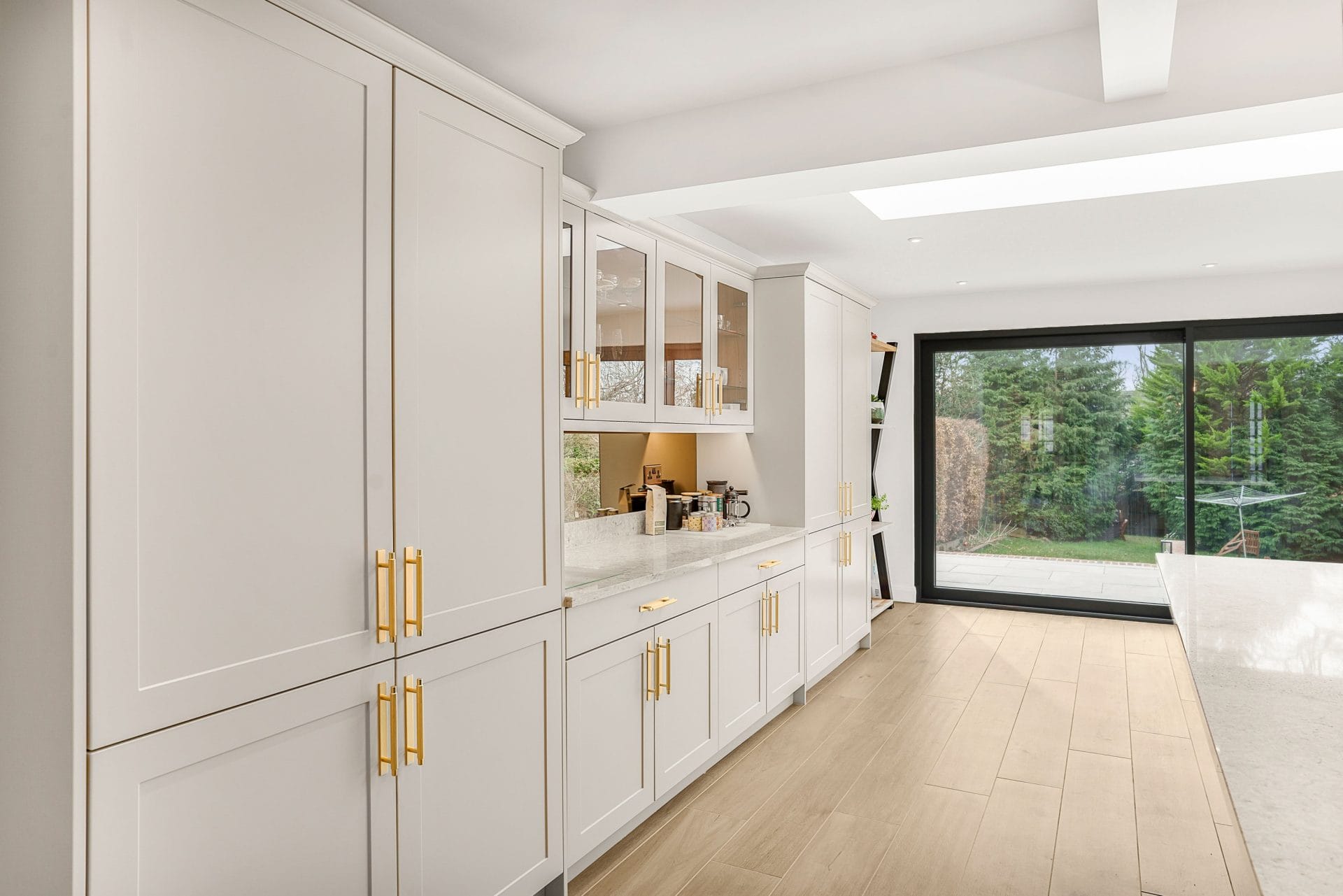
Frequently Asked Questions: Kitchen Worktops
What is the most popular kitchen worktop material in the UK right now?
Quartz is consistently the most popular choice for UK kitchens, and has been for several years. Its combination of low maintenance, durability, and wide design range makes it a practical fit for most households. That said, popularity isn’t the same as the right choice — the best worktop material depends on how you cook, your kitchen style, and how much upkeep you’re prepared to do.
Can you put hot pans directly onto a quartz worktop?
No, we would always recommend avoiding this. Although quartz offers some heat resistance, placing hot pans directly onto the surface can cause discolouration, thermal shock, or even cracking over time. Using a trivet or heat mat is always the safest option to protect the worktop.
How often does a timber worktop need oiling?
For a new timber worktop, we recommend oiling every four to six weeks for the first six months. After that, a couple of times a year is generally sufficient.
Is Dekton worth the extra cost?
For the right project, yes. Dekton’s resistance to heat, scratches, UV light, and staining is genuinely exceptional.
HKS Interiors designs and installs bespoke kitchens, bathrooms, and bedrooms across East Sussex from showrooms in Heathfield, Haywards Heath, and Eastbourne.