
If you have started planning a new kitchen, you have probably come across two terms again and again: handleless and in-frame. They sit at opposite ends of the style spectrum, one sleek and minimal, the other rooted in traditional cabinetmaking, and choosing between them shapes almost every other decision you will make about your kitchen. In short, a handleless kitchen suits homes wanting a clean, contemporary look with integrated technology, while an in-frame kitchen suits homes wanting character, durability and a more classic feel. But the right choice depends on far more than looks alone, so let us walk through exactly what separates the two.
What Is a Handleless Kitchen?
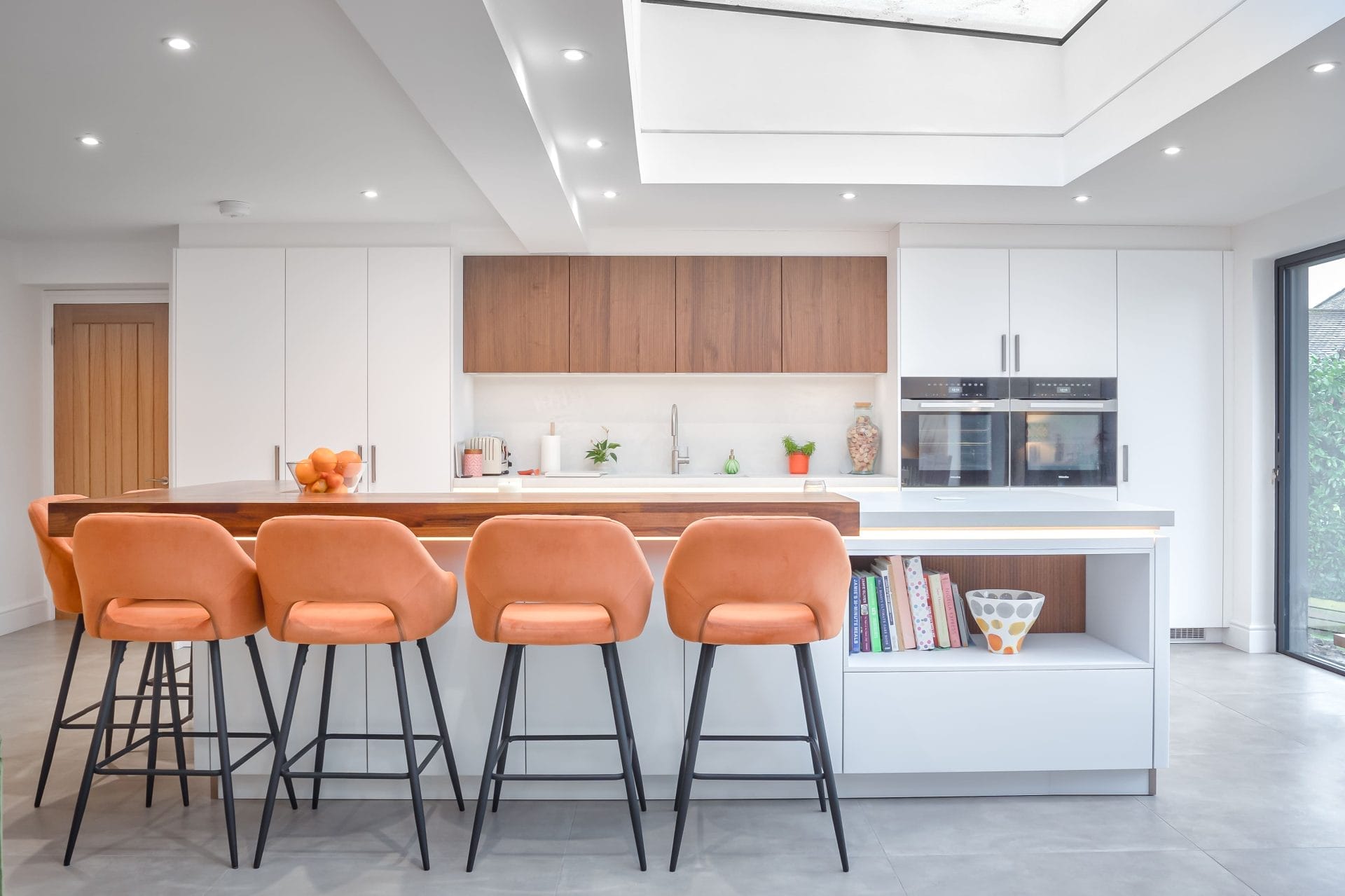
A handleless kitchen does exactly what the name suggests. Doors and drawers open using a recessed grip rail, a push-to-open mechanism, or an integrated finger pull, rather than a traditional handle. The style originated in Germany, where cabinet makers spent decades refining the engineering behind it, and it has become one of the most requested looks in modern kitchen design.
The appeal goes beyond aesthetics. Without handles interrupting the cabinet fronts, you get uninterrupted lines that make even a busy kitchen feel calmer and more spacious. It is a style that lends itself brilliantly to open-plan living, where the kitchen needs to look as considered as the rest of the room.
What Is an In-Frame Kitchen?
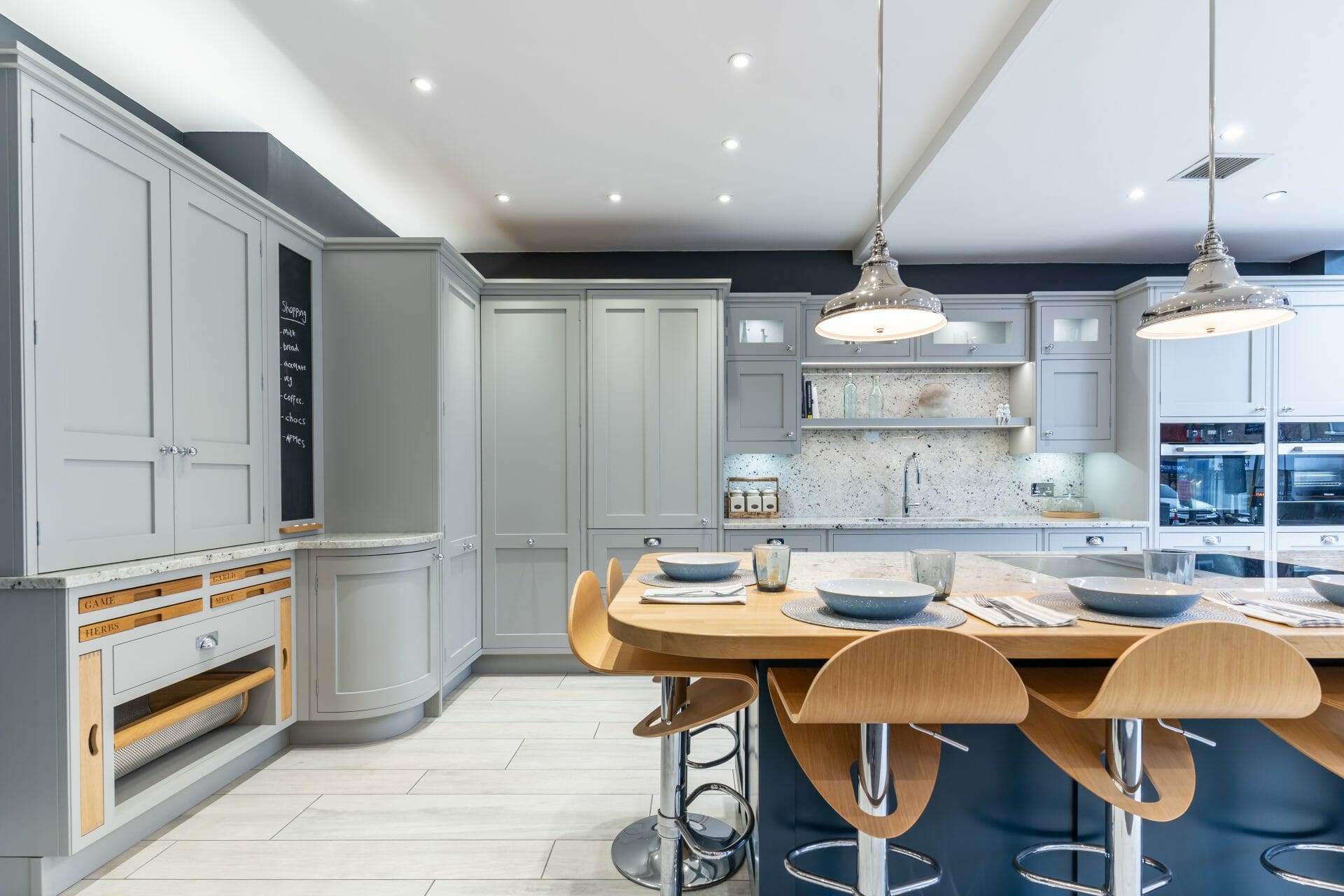
An in-frame kitchen takes its cue from cabinetmaking traditions that predate fitted kitchens altogether. Each door and drawer front sits within a solid wooden frame attached to the front of the cabinet, rather than simply lying flush against it. That frame is not just decorative. It adds genuine structural rigidity to the cabinet, which is part of why in-frame kitchens have such a strong reputation for longevity.
Because the style has such deep roots in English design, it works particularly well in period properties and traditional homes, though it can also be given a more contemporary edge with the right colour palette and worktop choice.
Handleless vs In-Frame: Comparing Style, Practicality and Cost
Both styles are available across our modern and traditional ranges, so the decision is not always as clear-cut as “modern equals handleless” and “traditional equals in-frame.” Here is how the two compare on the factors that matter most day to day.
| Consideration | Handleless Kitchen | In-Frame Kitchen |
|---|---|---|
| Overall look | Sleek, minimal, uninterrupted lines | Characterful, traditional, defined by the frame detail |
| Best suited to | Contemporary and open-plan homes | Period properties and classic interiors |
| Construction | Flush doors with integrated opening mechanisms | Doors and drawers set within a solid frame for added rigidity |
| Cleaning and maintenance | Smooth surfaces are quick to wipe down | The frame detail needs a little extra attention to keep grooves free of dust and grease |
| Longevity | Excellent, with precision-engineered mechanisms | Exceptional, often associated with kitchens built to last decades |
| Typical investment | Mid to premium, depending on finish and mechanism | Mid to premium, reflecting the handcrafted joinery involved |
Which Homes Suit Which Style?
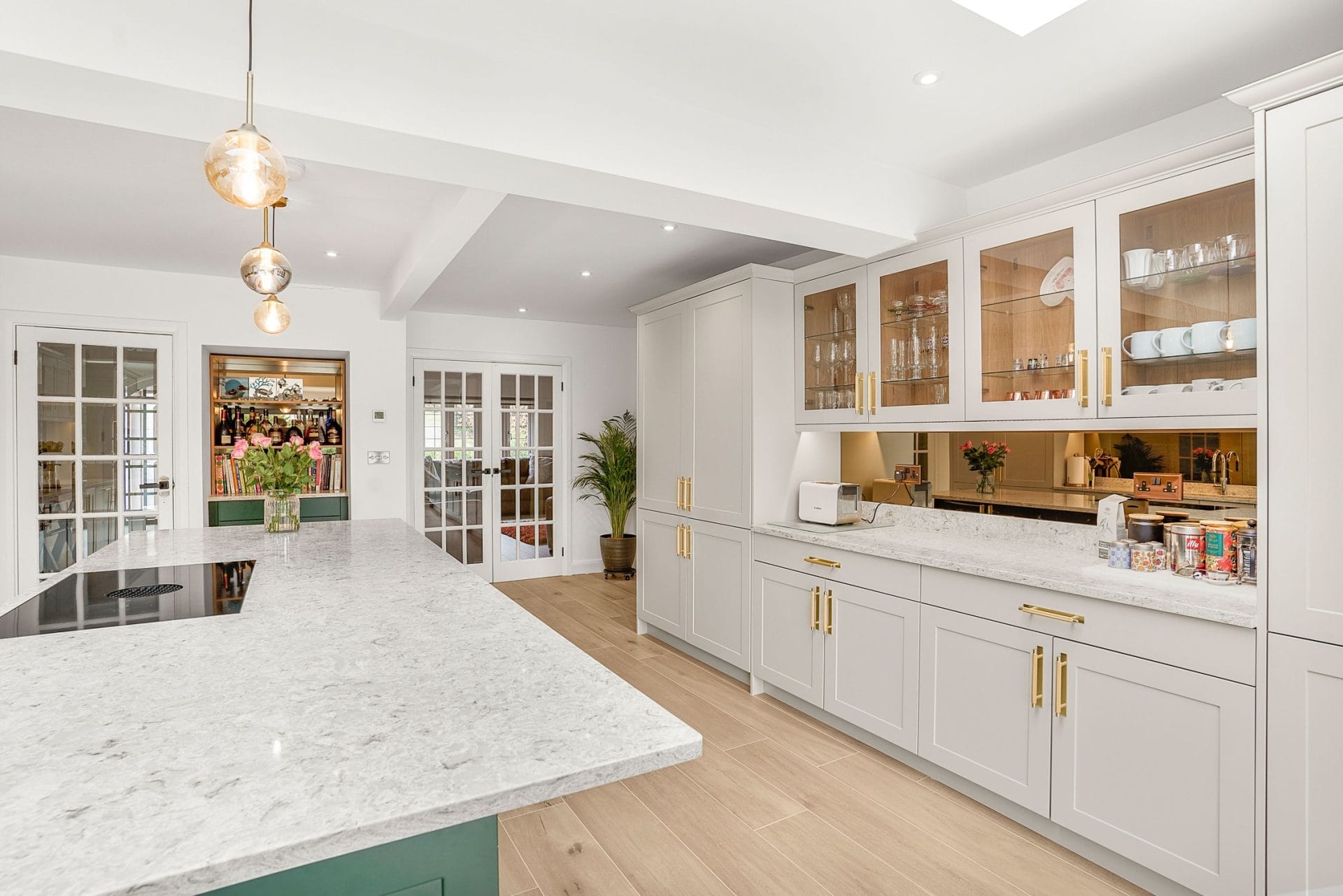
One of the most common misconceptions we hear in the showroom is that a period home has to have a traditional kitchen. That is not the case at all. A handleless kitchen in a warm, muted colour can sit beautifully in a converted barn or cottage, particularly if you want the kitchen to feel like a deliberate contrast to exposed beams or original brickwork. Equally, an in-frame kitchen can look wonderfully at home in a new-build, especially when paired with a bold paint colour and modern brassware.
What matters more than the age of the property is how you use the space. If your kitchen opens directly onto a living or dining area, a handleless design tends to feel more cohesive with the rest of the room, since there is less visual clutter competing with your furniture and finishes. If your kitchen is more of a standalone room, an in-frame design gives you the freedom to make it a real feature in its own right.
Practical Details Worth Considering
A few practical points rarely come up until you are actually living with the kitchen, and they are worth thinking about before you commit to either style.
With handleless kitchens, the position of the push-to-open mechanism matters more than people expect. On a run of drawers next to an appliance such as a dishwasher, you need enough clearance for the drawer to release and open fully without catching on the appliance door. Our designers plan this at the layout stage so you never end up with a drawer that only opens halfway.
With in-frame kitchens, the frame itself creates a small groove around each door and drawer. It is barely noticeable day to day, but it is worth knowing that this detail benefits from an occasional wipe with a soft brush, particularly in a busy family kitchen where flour, crumbs and grease are part of daily life. It is a minor consideration set against the character the frame brings, but it is the kind of detail that only becomes obvious once you have lived with the kitchen for a year or two.
Can You Combine Handleless and In-Frame Elements?
Yes, and it is more common than you might think. Many of our clients choose an in-frame cabinet style for the main run of units, then introduce a handleless larder or island to keep sightlines clean around a key feature. Others do the reverse, choosing a handleless kitchen overall but adding an in-frame dresser unit or drinks cabinet as a standout piece. There is no rule that says your whole kitchen has to be one style throughout, and blending the two is a great way to bring in the practicality of one alongside the character of the other.
Making Your Final Decision
If you are still torn, the best next step is to see both styles in person rather than relying on photographs alone. Colour, grain, and the way light catches a frame or a handleless edge all look different in real life, and it is genuinely difficult to judge from a screen how a finish will feel in your own kitchen. You can explore examples of both styles in our kitchen gallery, and if budget is part of your decision-making, our kitchen pricing guide is a useful starting point before you visit.
Our showrooms in Haywards Heath, Heathfield and Eastbourne each display both handleless and in-frame kitchens, so you can compare finishes side by side and get a proper feel for the details that matter most to you.
Frequently Asked Questions
Is a handleless kitchen more expensive than an in-frame kitchen?
Not necessarily. Both styles are available across a range of price points, and the final cost depends far more on the materials, finish and appliances you choose than on whether the kitchen is handleless or in-frame.
Do handleless kitchens show fingerprints more than other styles?
Gloss finishes can show marks more readily regardless of handle style, but many handleless kitchens use matt or textured finishes specifically to reduce this. Our designers can talk you through which finishes cope best with everyday family life.
Are in-frame kitchens only suitable for period homes?
No. While in-frame kitchens have a natural affinity with period properties, they work equally well in contemporary homes when paired with modern colours, worktops and lighting.
Which style is easier to clean?
Handleless kitchens tend to have fewer grooves and joints, which makes daily wiping down slightly quicker. In-frame kitchens need a little more attention around the frame detail, though this is a minor consideration rather than a drawback.
Can I see both styles before making a decision?
Yes. All three of our Sussex showrooms display handleless and in-frame kitchens, so you can compare finishes, textures and mechanisms in person before deciding.
If you would like to explore handleless and in-frame kitchens in more detail, book a free design appointment with one of our designers, who can talk through which style suits your home, your lifestyle and your budget.